
 +91-70006-33774
  info@drbhupeshmahawar.com
 Sector G, Scheme No. 54, Vijay Nagar, Indore(M.P.)
Ankle Sprains
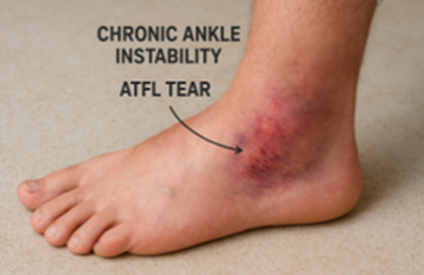
Chronic ankle instability occurs when the ATFL ligament is repeatedly injured and fails to heal properly. Early physiotherapy and bracing help, while surgery is reserved for persistent cases.

Causes
- Repeated ankle sprains (most common cause).
- Incomplete healing after an initial ligament injury.
- Weak or torn Anterior Talofibular Ligament (ATFL) – the main stabilizer on the outside of the ankle.
- Poor balance or proprioception after injury.
- Sports injuries (football, basketball, running on uneven surfaces).
- Wearing unstable or inappropriate footwear.
Symptoms
- Persistent pain on the outside of the ankle.
- Swelling and tenderness around the ankle joint.
- Recurrent “giving way” or rolling of the ankle during walking, running, or sports.
- Instability or weakness, especially on uneven ground.
- Stiffness and reduced range of motion.
- Bruising after repeated sprains.
Treatments
Conservative (Non-surgical):
- RICE (Rest, Ice, Compression, Elevation) after acute injury.
- Bracing or taping to support the ankle.
- Physiotherapy: strengthening muscles, balance, and proprioception training.
- Medications: anti-inflammatory drugs for pain/swelling.
- Activity modification and supportive footwear.
Surgical (if conservative treatment fails):
- Broström procedure: tightening or repairing the torn ATFL.
- Ligament reconstruction with graft tissue if severely damaged.
- Arthroscopy to clean up scar tissue or cartilage damage.
Rehabilitation:
- Gradual weight-bearing and exercises.
- Full recovery may take 3–6 months depending on severity and surgery

 Emergency No. : (+91) 74899-02258