 +91-70006-33774
  info@drbhupeshmahawar.com
 Sector G, Scheme No. 54, Vijay Nagar, Indore(M.P.)
Calcaneal Spur
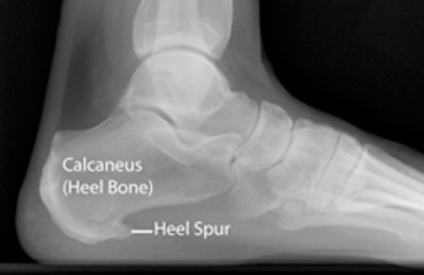
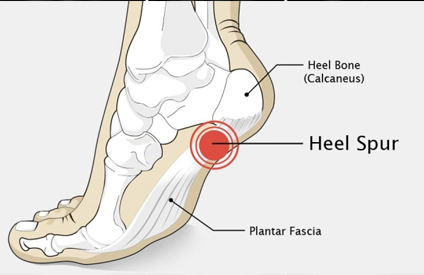
A calcaneal spur is a bony outgrowth (osteophyte) that develops on the underside (plantar surface) or back (posterior surface) of the calcaneus (heel bone). It often forms where the plantar fascia or Achilles tendon attaches to the heel and is commonly associated with chronic inflammation or overuse.
Type:
(1.) Plantar (Inferior) Calcaneal Spur
- Located on the bottom of the heel.
- Often associated with plantar fasciitis.
(2.) Posterior Calcaneal Spur (Haglund’s deformity)
- Located at the back of the heel where the Achilles tendon inserts.
- Associated with Achilles tendinitis.
Causes:
A heel spur develops gradually due to chronic traction and stress on the heel bone and surrounding soft tissues.
- Plantar fasciitis (chronic inflammation of the plantar fascia).
- Repetitive stress or overuse (running, jumping, prolonged standing).
- Improper footwear (poor arch support or hard soles).
- Obesity (increased load on the heel).
- Aging (reduced elasticity of plantar fascia and fat pad).
- Flat feet or high arches (altered foot mechanics).
- Occupations involving long standing or walking on hard surfaces.
- Calcium deposition or microtrauma at the tendon or fascia insertion.
Symptoms
- Heel pain, especially with first steps in the morning or after rest (“start-up pain”).
- Sharp, stabbing pain under the heel when walking or standing long.
- Tenderness at the bottom (or back) of the heel.
- Swelling and mild warmth in the heel area.
- Pain increases after prolonged activity, but may ease with rest.
- Some patients have no symptoms — the spur may be an incidental X-ray finding.
Surgical Treatment:
- Used only when all other methods fail after ≥6–12 months.
- Plantar fascia release (partial) and spur removal.
- Post-surgical physiotherapy is essential for recovery.

 Emergency No. : (+91) 74899-02258