 +91-70006-33774
  info@drbhupeshmahawar.com
 Sector G, Scheme No. 54, Vijay Nagar, Indore(M.P.)
Foot & Ankle Tendon Injuries
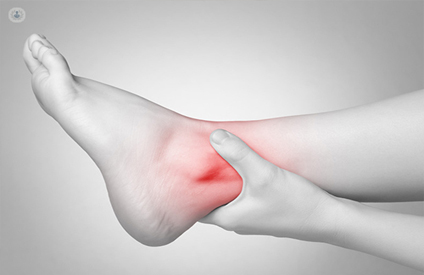
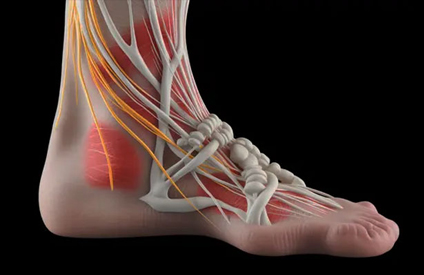
Foot and ankle tendon injuries involve damage to the tendons that connect muscles to bones and help control foot and ankle movement. These injuries can range from inflammation (tendinitis) to tears or ruptures. Commonly affected tendons include:
- Achilles tendon (back of ankle)
- Posterior tibial tendon (inner side of ankle)
- Peroneal tendons (outer ankle)
- Anterior tibial tendon (front of ankle)
- Extensor tendons (top of foot)
- Flexor tendons (bottom of foot)
Causes:
- Overuse or repetitive stress from running, jumping, or walking long distances.
- Sudden trauma or twisting injury (sports, falls, or missteps).
- Poor foot mechanics – flat feet or high arches increasing tendon stress.
- Improper footwear – lack of arch or ankle support.
- Weak or tight calf muscles causing strain on tendons.
- Degenerative changes (tendinosis) in older adults.
- Inflammatory conditions such as rheumatoid arthritis.
- Direct trauma (cuts or crush injuries) causing partial or complete tendon rupture.
Symptoms
- Pain and tenderness along the course of the affected tendon.
- Swelling or thickening around the ankle or foot.
- Stiffness or weakness during movement.
- Pain on specific ankle motions (inversion, eversion, dorsiflexion, plantarflexion).
- Snapping or popping sensation if tendon subluxes or tears.
- Difficulty walking or standing on toes/heels.
- Bruising or deformity (in case of rupture).
Common Types of Foot & Ankle Tendon Injuries
A. Achilles Tendon Injury:
- Cause: Overuse, running, jumping, or sudden acceleration.
- Symptoms: Pain at the back of the heel, swelling, stiffness, and difficulty pushing off.
- Treatment: Rest, ice, heel lifts, stretching, physical therapy; surgery for rupture.
B. Posterior Tibial Tendon Injury:
- Cause: Overuse or degeneration, especially in flat-footed individuals.
- Symptoms: Pain along the inside of the ankle, arch collapse, difficulty standing on toes.
- Treatment: Orthotics, rest, physical therapy, immobilization, or surgical repair in severe cases.
C. Peroneal Tendon Injury:
- Cause: Twisting ankle outward or chronic instability.
- Symptoms: Pain and swelling on the outer ankle, weakness in eversion, possible snapping sensation.
- Treatment: Rest, ice, bracing, strengthening exercises, surgery if torn or unstable.
D. Anterior Tibial Tendon Injury:
- Cause: Overuse or trauma, often in runners or older adults.
- Symptoms: Pain over the front of the ankle or foot, foot drop in rupture.
- Treatment: Immobilization, orthotic support, and surgical repair for rupture.
E. Flexor Tendon Injury (Flexor Hallucis / Flexor Digitorum):
- Cause: Repetitive strain (dancers, athletes) or trauma.
- Symptoms: Pain on the inner side or bottom of the foot, worse with toe flexion.
- Treatment: Rest, stretching, orthotics, and surgery for severe tears.
F. Extensor Tendon Injury:
- Cause: Overuse (tight footwear) or laceration.
- Symptoms: Pain and swelling on the top of the foot, difficulty extending toes.
- Treatment: Rest, physiotherapy, splinting, or repair if cut.
Treatments:
A. Conservative (Non-Surgical) Management:
- Rest and activity modification – avoid running or jumping.
- Ice application – 15–20 min several times daily to reduce swelling.
- Compression and elevation to control inflammation.
- Immobilization – brace, boot, or splint in severe pain or partial tears.
- NSAIDs – relieve pain and inflammation.
- Physical therapy – stretching, eccentric strengthening, balance training.
- Orthotic insoles or heel lifts – support and reduce tension on tendons.
- Footwear modification – shoes with proper cushioning and ankle stability.
B. Advanced / Interventional Options:
- Corticosteroid injections – only for certain tendons, used cautiously.
- Platelet-Rich Plasma (PRP) – to promote healing in chronic tendinopathy.
- Extracorporeal Shock Wave Therapy (ESWT) – stimulates healing in chronic injuries.
C. Surgical Treatment:
- Complete tendon rupture.
- Severe degeneration not responding to conservative care.
- Chronic instability due to tendon dislocation.
- Tendon repair or reconstruction.
- Debridement of degenerated tissue.
- Tenodesis or tendon transfer in chronic ruptures.

 Emergency No. : (+91) 74899-02258