 +91-70006-33774
  info@drbhupeshmahawar.com
 Sector G, Scheme No. 54, Vijay Nagar, Indore(M.P.)
Hallux Valgus / Hallux Varus
Hallux valgus, commonly known as a bunion, is a foot deformity where the big toe turns inward (medially) and the joint at its base protrudes outward, forming a bony bump.
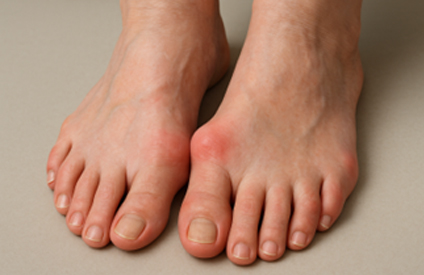
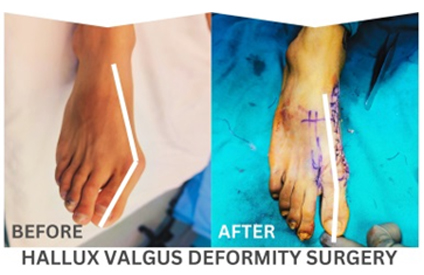
Hallux Valgus (Bunion):
Deformity where the big toe deviates outward (towards the other toes), causing a bony bump at the base of the toe.
Hallux Varus:
Opposite deformity where the big toe deviates inward (away from other toes).
Causes
- Genetic predisposition (family history).
- Wearing tight, narrow, or high-heeled shoes.
- Flat feet or abnormal foot mechanics.
- Arthritis (especially rheumatoid arthritis).
- Trauma or previous surgery (e.g., overcorrection after bunion surgery).
- Neuromuscular conditions (can contribute to hallux varus).
Symptoms
- Visible deformity (toe angling outward in valgus, inward in varus).
- Pain and tenderness at the base of the big toe.
- Swelling, redness, and inflammation around the joint.
- Corns, calluses, or skin irritation from rubbing in shoes.
- Restricted movement and stiffness of the big toe.
- Difficulty wearing normal shoes and walking comfortably.
Treatments
Conservative (Non-surgical):
- Proper footwear: wide toe box, soft insoles, avoid high heels.
- Toe spacers or splints to reduce friction and realign toes (especially early stage).
- Orthotics (shoe inserts) to correct abnormal mechanics.
- Pain relief: NSAIDs, ice packs, padding.
- Exercises: toe stretches, strengthening foot muscles.
Surgical (for severe deformity or persistent pain):
- Bunionectomy (for valgus): removing bony prominence and realigning toe.
- Osteotomy: cutting and repositioning the bone.
- Arthrodesis (fusion): fusing the joint in correct alignment (used in severe arthritis).
- Soft tissue procedures: tendon balancing to correct alignment.

 Emergency No. : (+91) 74899-02258