
 +91-70006-33774
  info@drbhupeshmahawar.com
 Sector G, Scheme No. 54, Vijay Nagar, Indore(M.P.)
Diabetic Foot Ulcer
A diabetic foot ulcer (DFU) is a chronic, open wound on the foot or lower leg that can develop in people with diabetes, often due to a combination of poor circulation and nerve damage (neuropathy). These ulcers can be difficult to heal and, if left untreated or if they become severely infected, can lead to serious complications, including hospitalization and even lower extremity amputation.
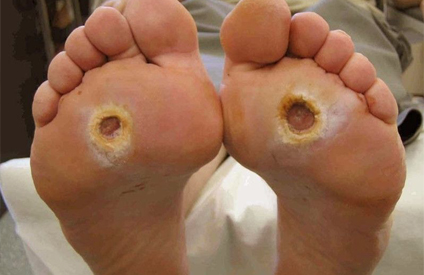
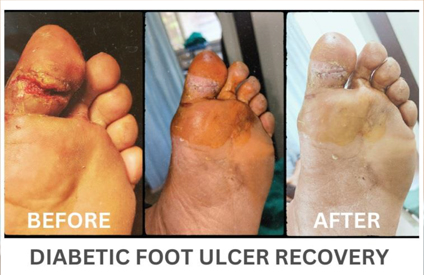
Risk Factor
- High blood sugar (hyperglycemia): Damages nerves (neuropathy) and reduces sensation in the feet.
- Poor blood circulation: Slows down wound healing.
- Repeated pressure or injury: Small cuts, blisters, or pressure points can worsen into ulcers.
- Infections: Even minor wounds can become infected quickly in diabetics.
- Improper footwear & poor foot hygiene.
Symptoms
- Open wound or sore (commonly on toes, heel, or sole).
- Redness, swelling, and warmth around the area.
- Foul-smelling discharge if infected.
- Black tissue (gangrene) in severe cases.
- Numbness, tingling, or burning sensation in the feet.
- Difficulty walking due to pain and instability.
Treatments
- Blood Sugar Control – strict monitoring with insulin/medications.
- Wound Care – cleaning, dressing, debridement (removal of dead tissue).
- Infection Control – antibiotics (oral or IV).
- Pressure Relief (Off-loading): Use of casts, braces, or special footwear.
- Improve Blood Flow: Medications or vascular surgery if circulation is poor.
- Advanced Therapies: Vacuum dressings, skin grafts, growth factors.
- Surgery (if needed): Removal of infected tissue or amputation in severe gangrene cases.
- Prevention: Daily foot inspection, proper footwear, hygiene, regular medical checkups.

 Emergency No. : (+91) 74899-02258