 +91-70006-33774
  info@drbhupeshmahawar.com
 Sector G, Scheme No. 54, Vijay Nagar, Indore(M.P.)
Flat Foot
Flat foot (also known as fallen arches) is a condition where the arch of the foot collapses, and the entire sole touches or nearly touches the ground when standing. It can occur in one or both feet, and may be flexible (arch appears when not weight-bearing) or rigid (arch is absent all the time).
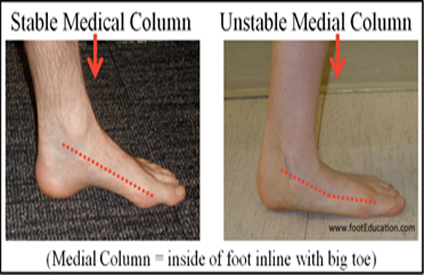
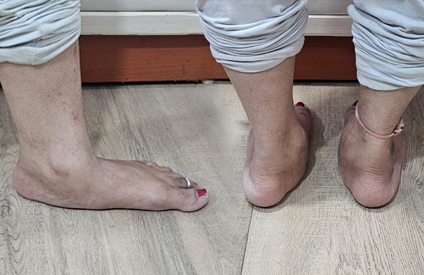
Causes:
Flat foot can be congenital (present at birth) or acquired (develops later in life).
1. Congenital Causes
(a.) Inherited ligamentous laxity (loose ligaments).
(b.) Abnormal bone structure of the foot (e.g., vertical talus).
(c.) Muscle weakness or neurological conditions (e.g., cerebral palsy).
2. Acquired Causes
(a.) (PTTD): Main cause in adults; the tendon that supports the arch becomes stretched or torn.
(b.) Injury or trauma: Fracture or dislocation affecting foot alignment.
(c.) Arthritis: Especially rheumatoid arthritis or osteoarthritis in the foot joints.
(d.) Obesity: Excess body weight weakens the foot arch.
(e.) Prolonged standing or overuse: Seen in athletes or people with standing jobs.
(f.) Age-related degeneration: Tendons and ligaments lose elasticity over time.
(g.) Diabetes or neuropathy: Can cause muscle weakness and arch collapse.
Symptoms:
- Flattened arch (especially visible when standing).
- Foot pain, often along the inner side of the ankle or arch.
- Swelling around the ankle or midfoot.
- Fatigue in the feet and legs after walking or standing for long periods.
- Heel tilting outward (valgus deformity).
- Difficulty standing on tiptoes.
- In severe or long-standing cases: Knee, hip, or lower back pain due to altered posture and gait mechanics.
Treatment:
Treatment depends on the type (flexible vs rigid) and severity of the condition.
A. Non-Surgical (Conservative): Most flexible or mild cases respond well to conservative care:
1. Proper footwear:
(a.) Supportive shoes with firm arch support and heel counter.
(b.) Avoid flat, unsupportive footwear (e.g., flip-flops).
2. Orthotic insoles:
(a.) Custom-made arch supports to realign the foot and reduce pain.
3. Physical therapy & exercises:
(a.) Strengthening the tibialis posterior and foot intrinsic muscles.
(b.) Stretching the Achilles tendon to improve flexibility.
4. Weight control:
(a.) Reduces stress on arches and joints.
5. Pain relief:
(a.) NSAIDs (e.g., ibuprofen) and ice therapy for inflammation.
6. Activity modification:
(a.) Avoid high-impact sports or long standing until pain improves.
B. Surgical Treatment: Used for severe, rigid, or painful flat feet not responding to conservative therapy.
1. Common procedures:
(a.) Tendon repair or transfer: Restores function of the tibialis posterior tendon.
(b.) Osteotomy: Repositions bones to recreate the arch.
(c.) Arthrodesis (joint fusion): Stabilizes the foot in advanced deformities.
(d.)Implant (arthroereisis): Used in children to support arch formation.

 Emergency No. : (+91) 74899-02258